Begin with a clear promise
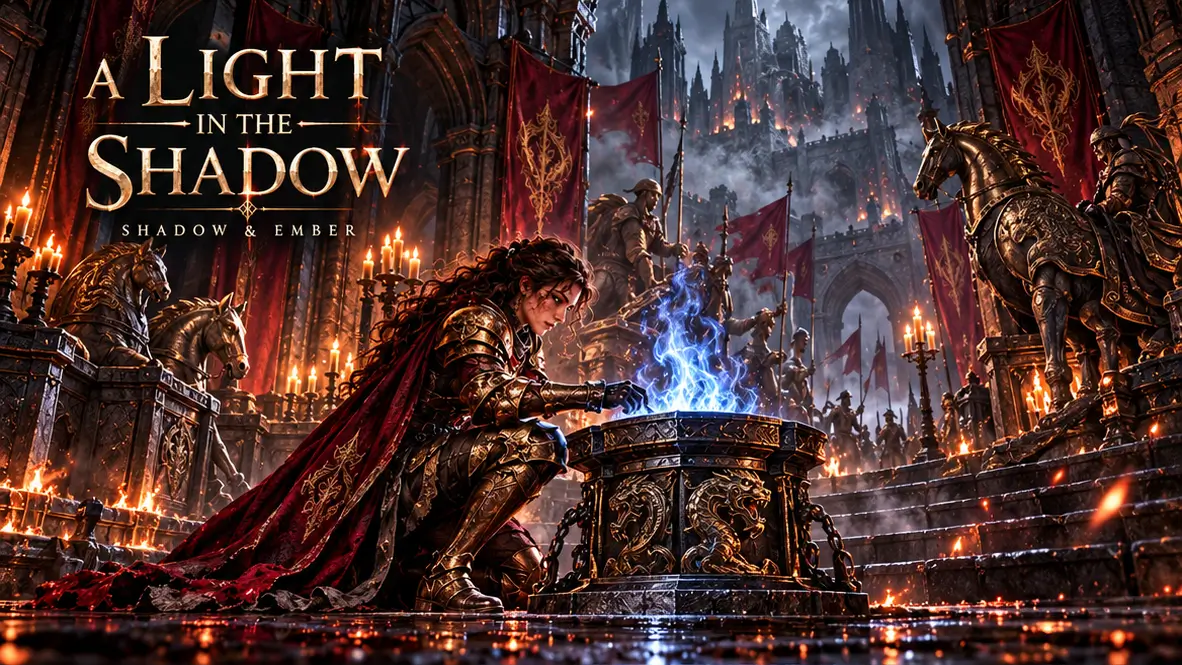
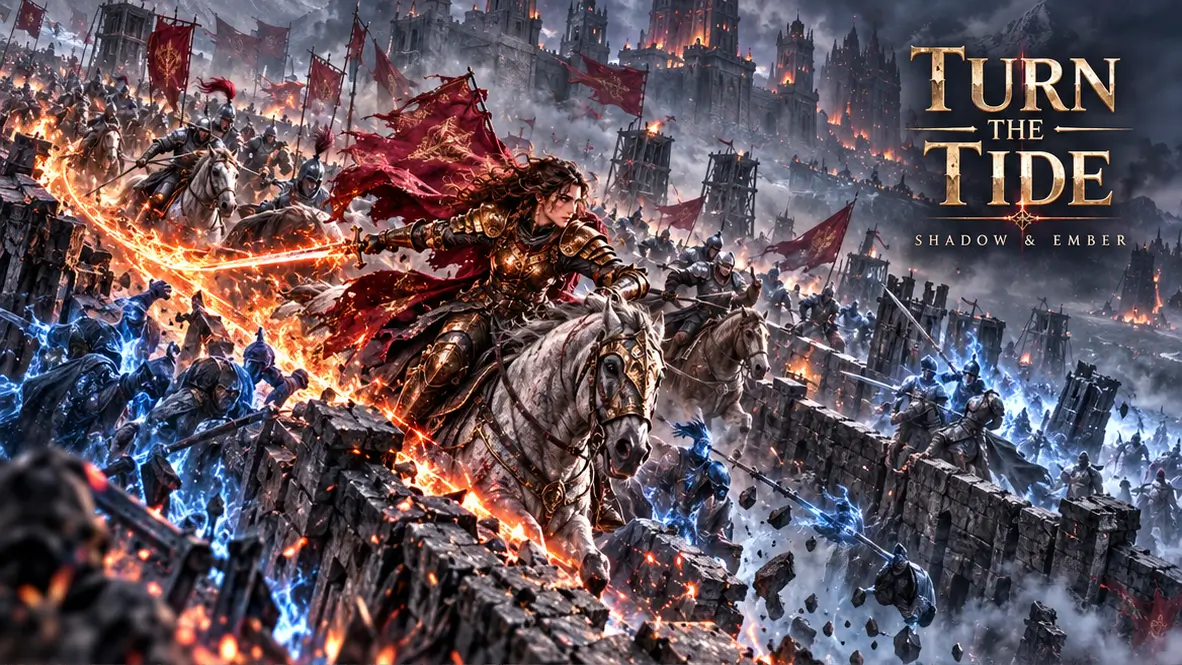
A world becomes easier to build when its central promise is clear. The Wild Frontier offers purposeful exploration; Shadow & Ember asks the player to preserve a fragile light; Distant Horizons follows the possibilities of a voyage; Wild Wonder grows through creature friendship. These are creative directions, rather than interchangeable marketing lines. Each one helps a team decide which ideas belong in its game and which attractive ideas might pull it away from its identity. A coherent experience emerges from those decisions as much as from individual pieces of artwork.
Give the player something to read
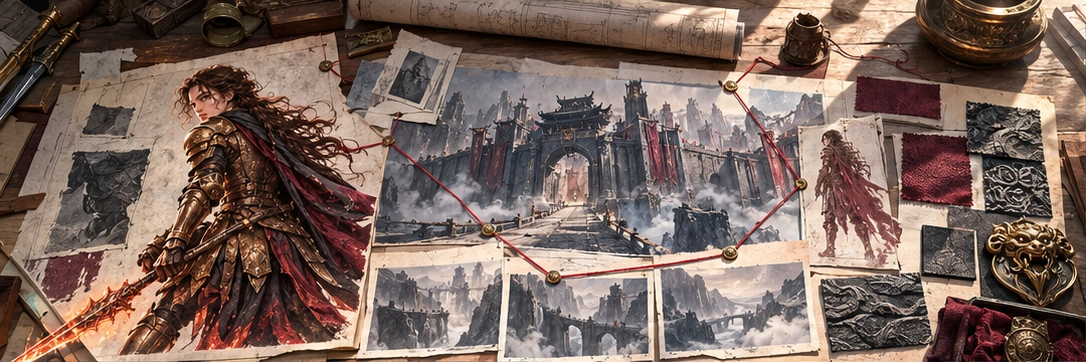
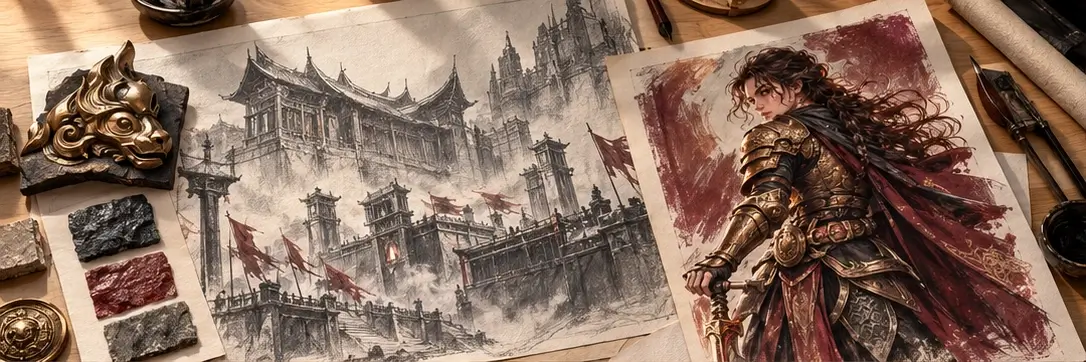
A landscape should communicate how it can be explored. Changes in colour, silhouette and material can distinguish a safe camp from a guardian’s territory without covering the scene in labels. Character design has a similar responsibility. The hunter’s equipment suggests life in the forest, while the ember knight’s worn armour belongs to a kingdom where restoration matters. These details support both storytelling and practical understanding. A player who can read the world has more freedom to act with confidence, even when the path ahead remains uncertain.
Keep a game’s images together
Visual consistency is especially important when an experience is introduced through a website. A character portrait, a panoramic scene and a crafting illustration should all feel as though they come from the same world. That does not mean repeating one image in every position. It means preserving recognisable characters, materials, lighting and proportion while showing genuinely different moments. Each Moonshot world has its own collection of scenes, so a visitor can move from a game card to its detailed story without feeling that the identity has changed along the way.
Let systems contribute to atmosphere
The way a player prepares, travels and returns can reinforce the world’s character. A workshop belongs to the frontier’s cycle of discovery and preparation. A sanctuary supports the ember knight’s responsibility to other people. A ship carries the crew’s shared history from one island to another. These relationships give systems an emotional role without requiring them to become complicated. A useful interaction can communicate who the characters are and how they live. Small, repeated actions often establish atmosphere more effectively than a long explanation at the beginning.
A world grows through revision
Worldbuilding is a process of testing whether the parts still support the same experience. A beautiful scene may need a clearer route. A striking character may need a more readable silhouette. A clever mechanic may ask the player to pay attention to something that does not matter elsewhere. Revision brings these parts back into conversation. The goal is not to remove surprise, but to make surprise belong to the world. When characters, environments and systems reinforce one another, the player can trust the experience enough to become curious about what lies beyond the next turn.
Explore Shadow & Ember