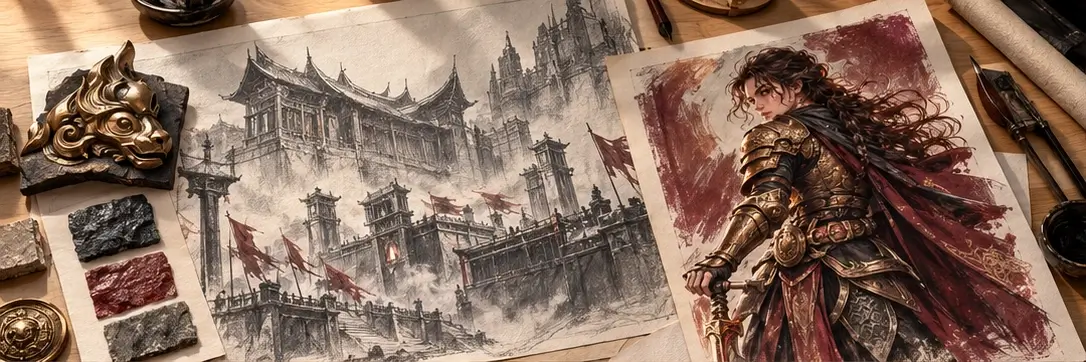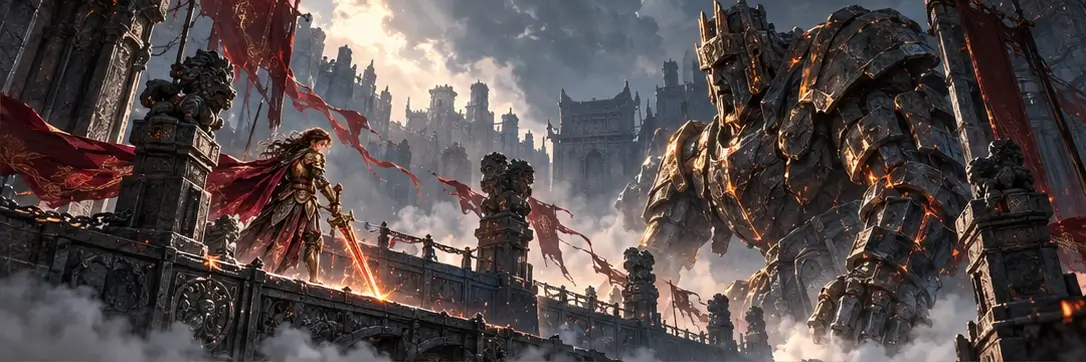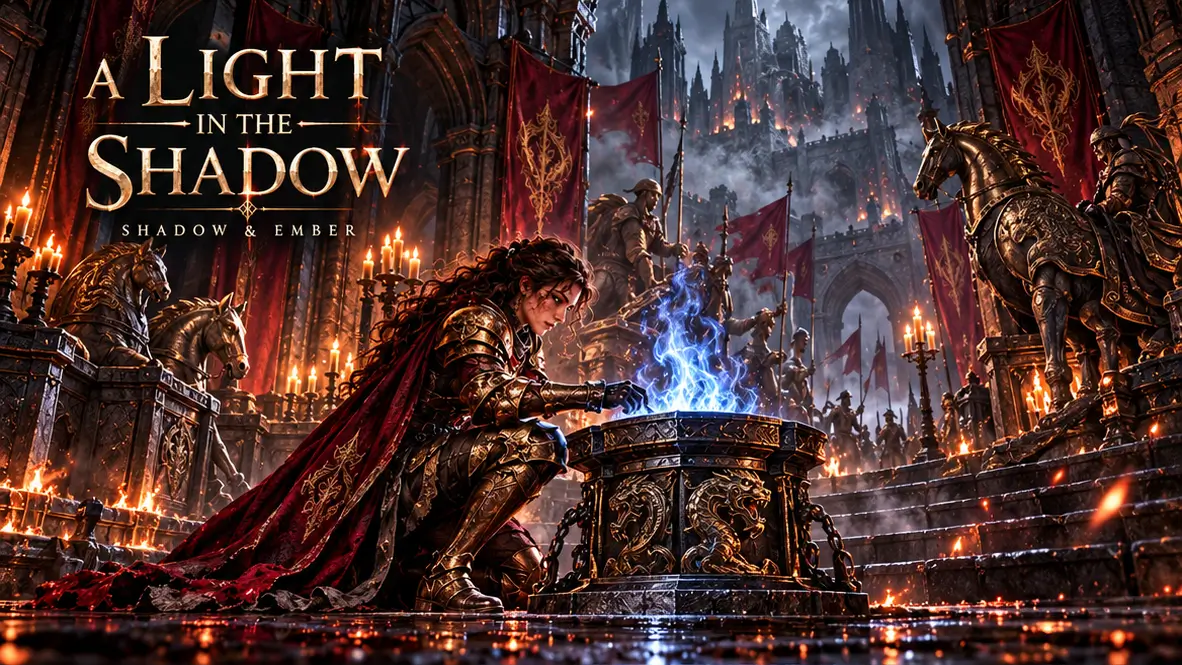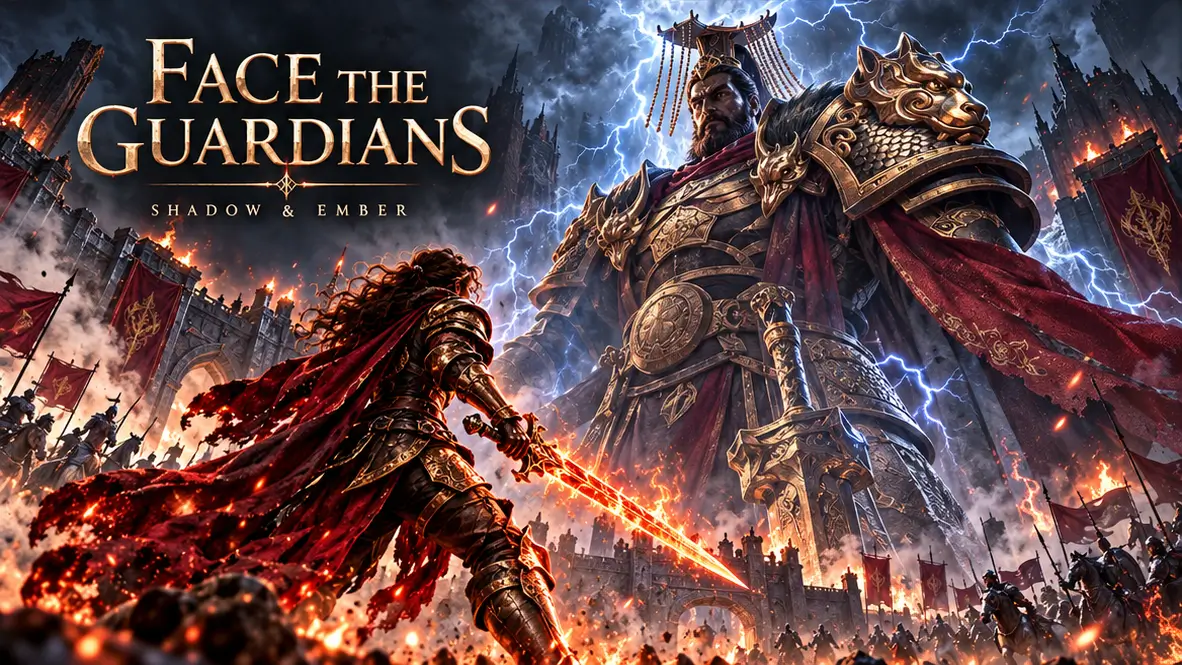

A world becomes easier to build when its central promise is clear. The Wild Frontier offers purposeful exploration; Shadow & Ember asks the player to preserve a fragile light; Distant Horizons follows the possibilities of a voyage; Wild Wonder grows through creature friendship. These are creative directions, rather than interchangeable marketing lines. Each one helps a team decide which ideas belong in its game and which attractive ideas might pull it away from its identity. A coherent experience emerges from those decisions as much as from individual pieces of artwork.
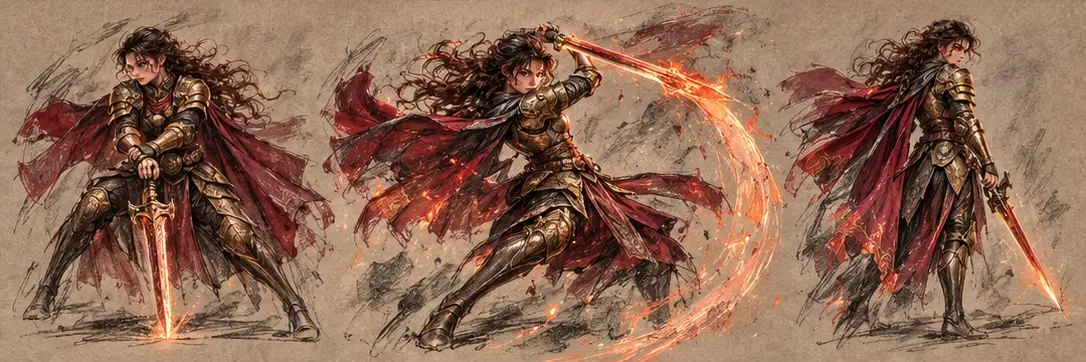
A landscape should communicate how it can be explored. Changes in colour, silhouette and material can distinguish a safe camp from a guardian’s territory without covering the scene in labels. Character design has a similar responsibility. The hunter’s equipment suggests life in the forest, while the ember knight’s worn armour belongs to a kingdom where restoration matters. These details support both storytelling and practical understanding. A player who can read the world has more freedom to act with confidence, even when the path ahead remains uncertain.