Protect the moment of decision
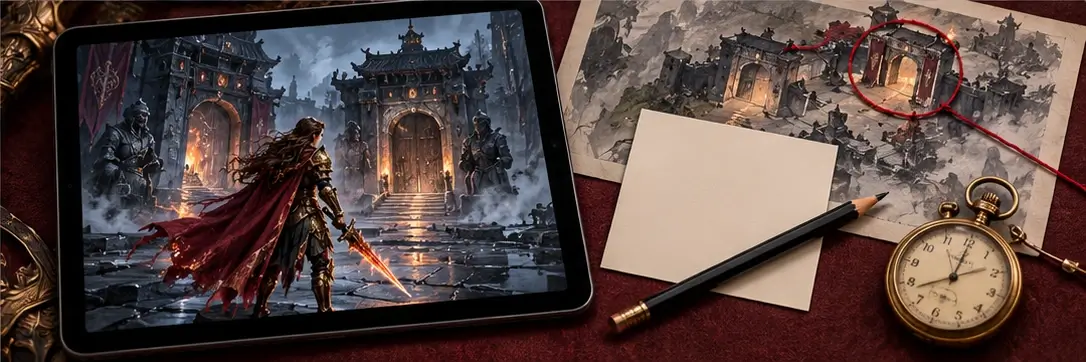
Performance matters most when a player needs to act on information. A crowded battle may look impressive in a still image, yet become difficult to understand if effects obscure a warning or the response to an input arrives unevenly. Start by identifying those decision points. Protect the visibility of the threat, the feedback from the player's action and the stability of the camera. Decorative density should be negotiated around those needs. The goal is a scene whose presentation supports play, rather than a scene that only survives a technical checklist.
Measure a representative scene
An empty test room offers a useful baseline, but it cannot represent a busy encounter with enemies, lighting, particles and interface updates active together. Build a repeatable scene that contains the combinations expected during play, then observe it under relevant device conditions. Keep the test route and starting state consistent so changes can be compared. A single best-case result tells little about moments of pressure. Record the conditions alongside the measurements, and avoid treating a number without context as a universal description of the game's behaviour.
Reduce noise before reducing identity
When a scene needs simplifying, ask which details carry recognition and which merely repeat information already present. The broad outline of a creature may matter more than another layer of sparks around it. A distinctive landmark may deserve resources that distant background clutter does not. Work with art and design to preserve those priorities rather than reducing every element equally. Selective simplification can improve readability as well as performance. It becomes a design opportunity when removing visual noise helps the important parts of the world communicate more confidently.
Make quality settings coherent
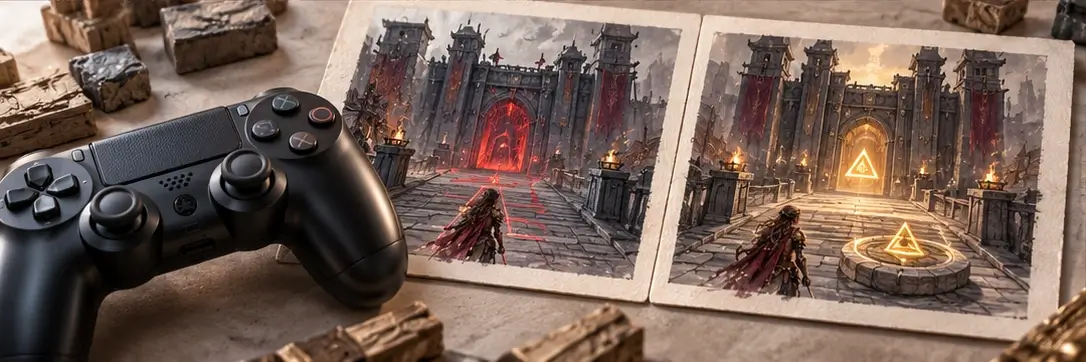
A lower-detail setting should remain a considered version of the same game. Check whether removed shadows alter navigation cues, whether reduced particles hide an attack boundary and whether changes to texture detail make interactive objects harder to distinguish. Provide alternative signals where an expensive effect previously carried essential information. The same principle applies to loading and transitions: continuity matters more than preserving every decorative flourish. Quality choices should adjust presentation while protecting the relationships the player relies on to understand a room, anticipate a threat and confirm an action.
Review the experience together
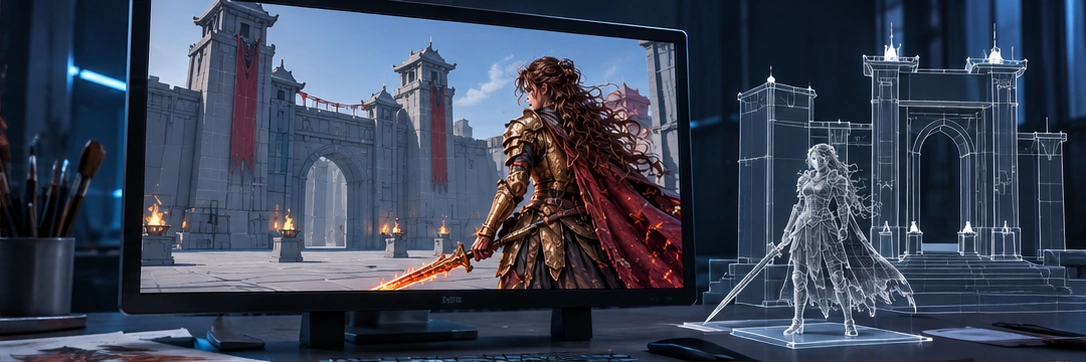
A performance review benefits from more than one perspective. Technical observations locate costly work; an artist can explain which features define a scene; a designer can identify the decisions that need clear feedback. Compare proposed changes in motion, at actual gameplay scale, rather than judging isolated assets. Keep a before-and-after record so the team can distinguish a useful reduction from an accidental loss of character. Performance becomes part of craft when the final result feels deliberate: clear under pressure, responsive to input and recognisably connected to the world.
Explore Shadow & Ember