An ocean with a readable history
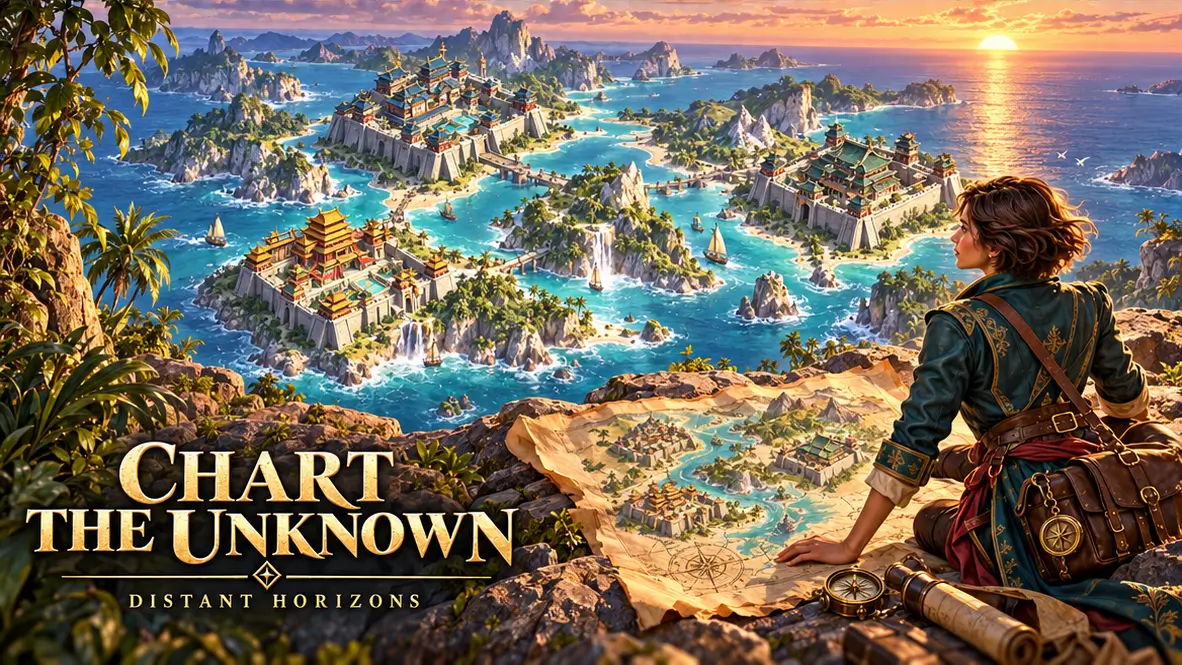
The sea in Distant Horizons is not empty space between objectives. Its currents, rock formations and changing light carry clues about the islands ahead. A line of pale water may reveal a shallow shelf; birds circling above a quiet inlet can suggest a sheltered landing. The maritime explorer learns to recognise these signs alongside the player. This creates a form of discovery that belongs to the world itself, encouraging attention to the horizon rather than constant attention to a marker in the corner of the screen.
The value of a good departure
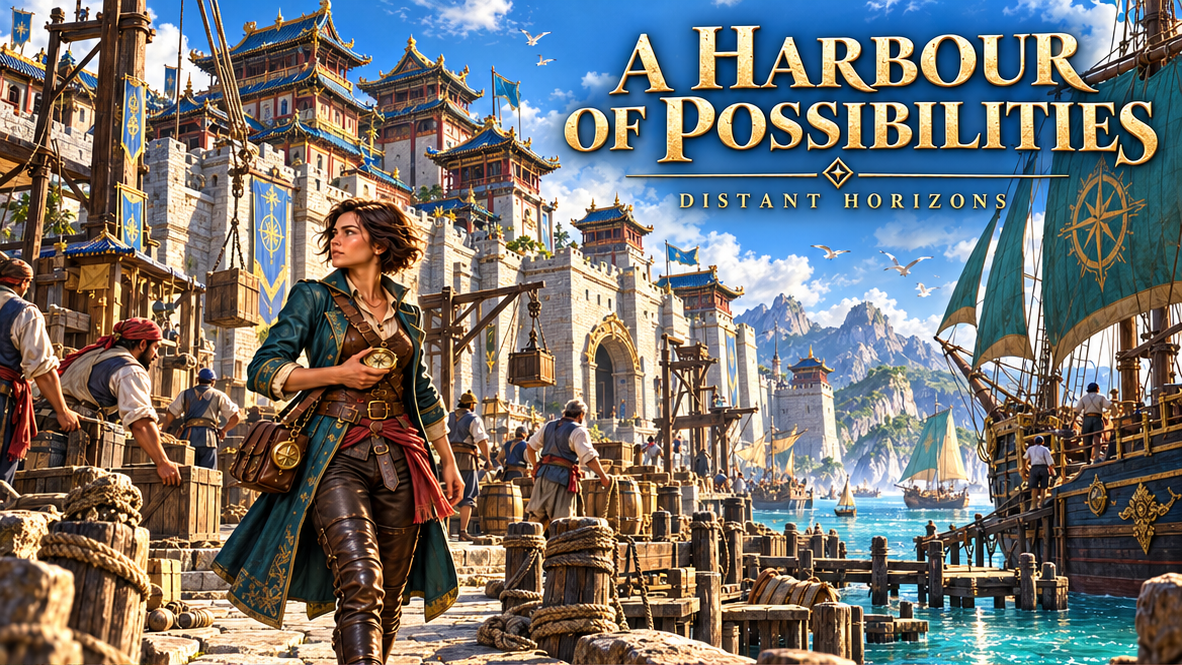
Preparation begins at the harbour, where an unfinished map shares a table with weather notes and the crew’s suggestions. There is no single correct route for every voyage. A well supplied expedition might investigate an exposed chain of cliffs, while a smaller crew could choose a protected channel and a longer journey. The proposed planning system connects these decisions to visible conditions. Its purpose is to make departure feel considered without turning the opening of every expedition into an administrative task. A few understandable choices can create a meaningful sense of ownership.
Companions who notice different things
The crew brings several ways of seeing the same landscape. A cartographer compares the curve of a bay with an old chart. A diver notices the shape of a submerged stairway. A scholar hears a familiar pattern in the names used by two distant settlements. Their observations should add possibilities rather than dictate the player’s actions. Over time, their interests become part of the journey’s character. Choosing who comes ashore is a practical decision that can also determine which part of an island’s history comes into focus.
Ruins shaped by the tide
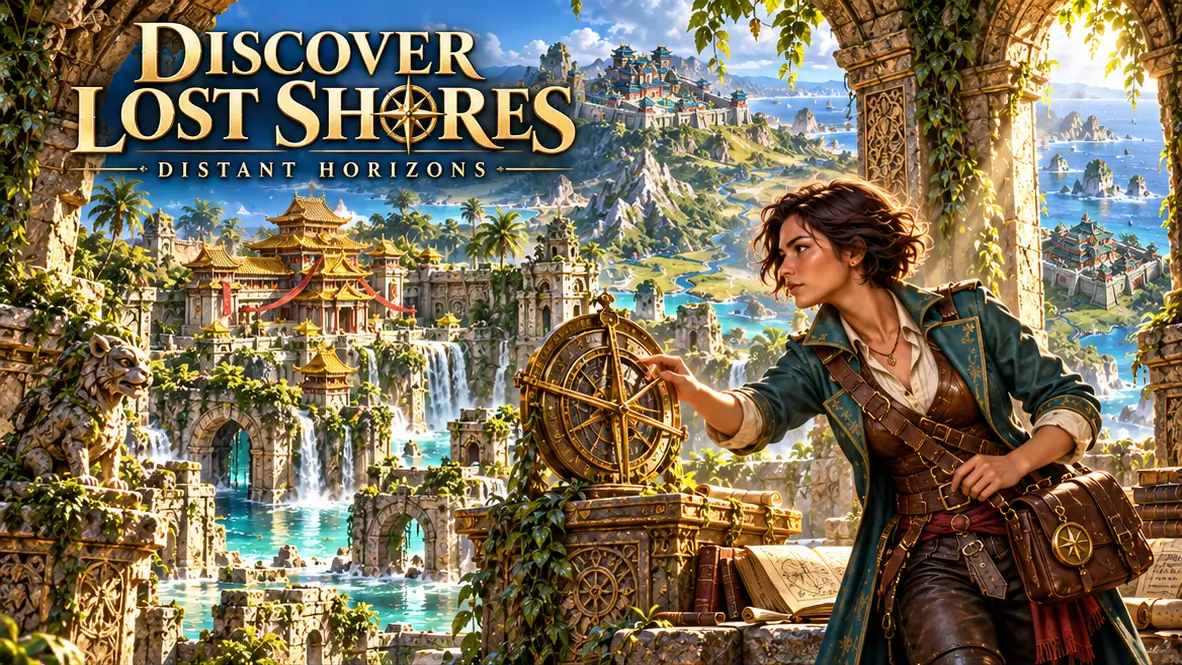
The forgotten civilisation of these islands built around the ocean. Doorways sit above old water lines, observatories face the rising sun and fragments of coastal roads disappear beneath the surface. Exploring these places means considering when they were built and how their environment has changed. A site that seems incomplete on the first visit may become understandable after another discovery. This approach allows the world to hold connections across several expeditions, rewarding players who remember a curious landmark and return with a different question.
Returning with more than treasure
A successful voyage brings back a better map, a new relationship and a story worth sharing. The harbour can reflect that progress through additional routes on a chart, unfamiliar objects on a workbench or a crew member eager to discuss what happened. The ship becomes a travelling home, linking otherwise distant places into one continuous adventure. Distant Horizons is imagined around the pleasure of setting out, the uncertainty of discovery and the satisfaction of understanding a little more of a vast world. Every tide offers another beginning, while each return gives the next departure a stronger sense of purpose.
Explore Distant Horizons