
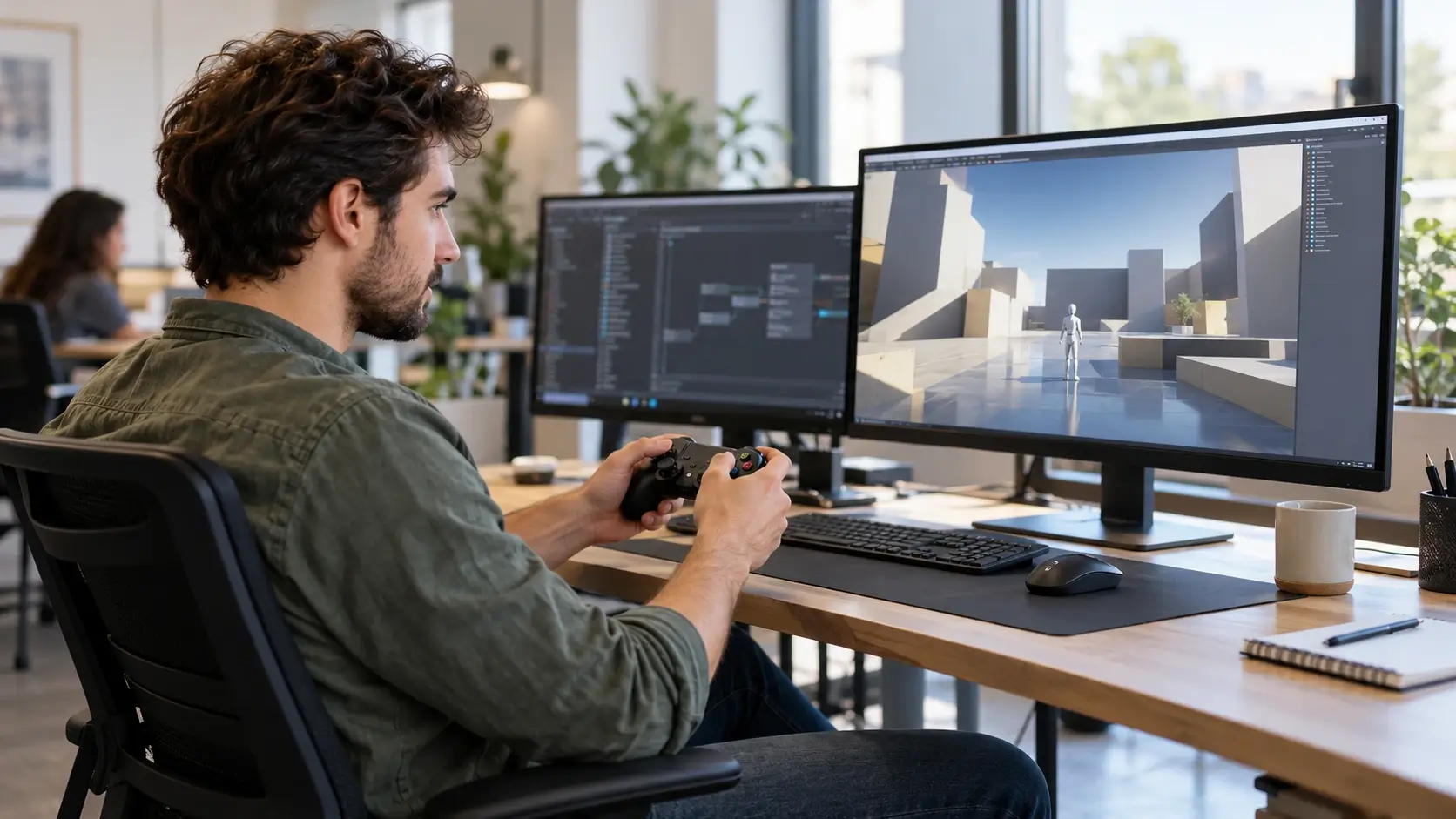
About the role
Own the practical behaviour behind a playable moment. Work with designers to define what an interaction should do, then implement and test the states, timing and feedback that make it dependable. A prototype should be easy to change; a mature feature should handle interruptions and unusual sequences without losing its rules. Collaborate with animation, audio and technical art to keep the final experience coherent. This role centres on runtime gameplay systems rather than website development or visual asset authoring.
What you will do
- Implement maintainable gameplay features with explicit states, clear ownership and predictable transitions.
- Build practical debugging tools and instrumentation that help the team understand why an interaction behaved as it did.
- Integrate animation events, collision, input and feedback while preserving responsive controls.
- Test interrupted actions, repeated input and unusual event orderings, and fix defects with reproducible examples.
- Profile representative scenes and improve performance without silently changing the intended player experience.
What you will bring
- Game development examples showing your implementation of an interactive system in a real-time engine.
- Strong programming fundamentals, practical debugging habits and an understanding of state and lifetime management.
- Experience collaborating through version control, code review and clear technical communication.
- The ability to explain performance or architecture trade-offs in relation to a concrete gameplay requirement.
What to include in your portfolio
Share a playable build or focused recording with a concise technical breakdown. Describe one feature you implemented, a difficult bug and the evidence that confirmed its fix. Include a small readable code sample where you are permitted to share it.