Begin with what you can see
The forest does not need to announce every destination. At the edge of a familiar trail, a line of disturbed leaves might lead towards a stream rather than the next obvious landmark. Pause long enough to compare the ground on either side. Hoofprints, broken stems and the direction of flowing water offer different kinds of evidence. Following one clue means choosing a question to investigate: what passed here, where did it go, and what might be waiting beyond the trees?
Let the landscape suggest a route
A distant ruin can provide a destination without prescribing the whole journey. Between the lookout and its stone arches lie a fallen trunk, a shallow crossing and a steep bank threaded with roots. Consider the approach as well as the reward. The direct line may be difficult to read, while a longer path offers shelter and a clearer view of the valley. Exploration becomes satisfying when the route reflects your observations, rather than simply your willingness to keep walking forwards.
Notice the forest's other inhabitants
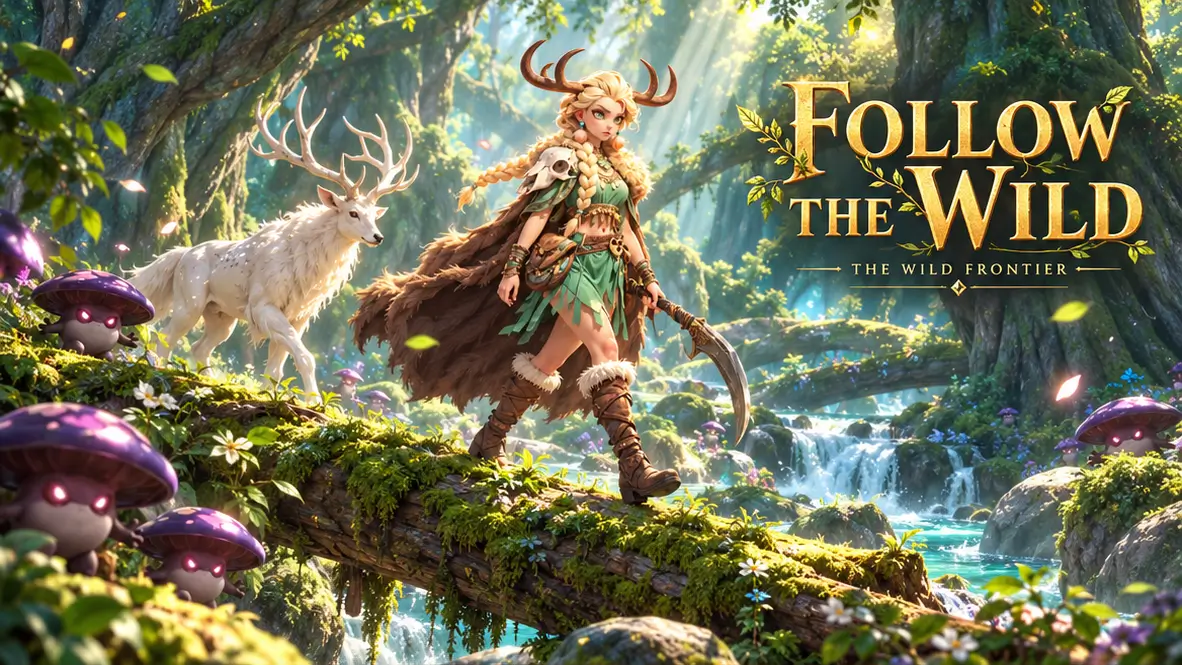
The white stag belongs to the landscape; it is more than a marker pointing towards a prize. Its hesitation near a clearing can draw attention to something you have overlooked. Smaller creatures make the undergrowth feel occupied, and their movement gives the scene a changing rhythm. Watch from a distance before moving closer. The frontier's character emerges through these encounters, especially when curiosity allows a quiet moment to remain quiet instead of turning every meeting into a confrontation.
Make a discovery you can remember
A forgotten camp is interesting because it connects a place to the people who used it. A sheltered fire pit, stacked timber and an unfinished trail suggest different parts of their routine. Look beyond the first object that catches your eye. Which way did the camp face? What could its occupants see from here? These small connections turn a collection of scenery into a location with a reason to exist, and give you a story worth taking back to your own companions.
Return with a new question
The most useful discovery may be a better understanding of a familiar place. From the far side of the stream, a ridge that once seemed impassable reveals a gentler approach. Make that relationship part of your next plan. Return to camp, decide which supplies would help and choose a companion suited to the terrain. The next expedition begins with something you learned on this one, keeping preparation and exploration connected without making the forest feel fully explained.
Explore The Wild Frontier