Follow the water
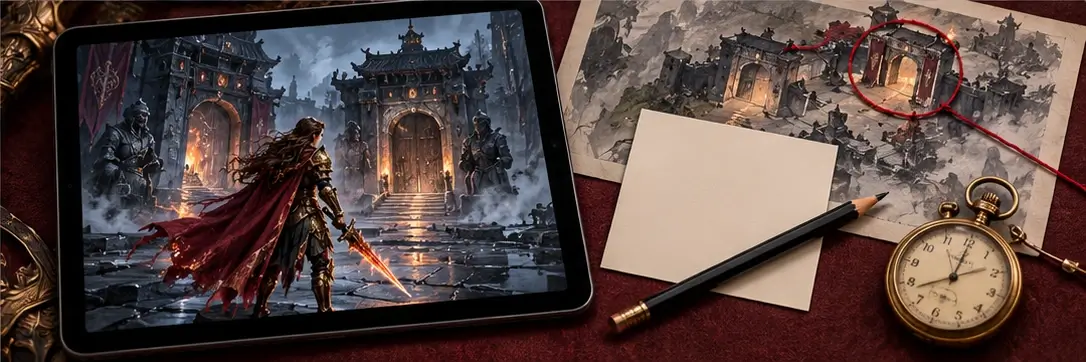
Consider two stones beside the sanctuary entrance. One sits beneath the damaged roof and stays wet; the other is sheltered by the arch. Giving both the same roughness and dark stain would erase a useful distinction. The wet stone should respond differently as the knight's ember lantern passes it. This small contrast can explain the building more convincingly than another layer of cracks. For a Shadow & Ember material concept, start with exposure, handling and maintenance. Age matters, but age alone does not tell us why one surface differs from its neighbour.
Do not make everything precious
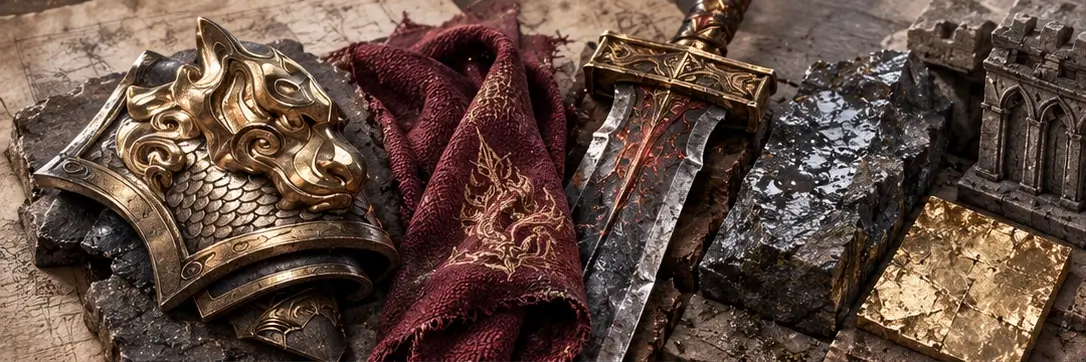
The guardian's metal ward, the knight's shield and a discarded cooking pot should not all demand the same glistening attention. A bright edge on the shield can reveal its turn. A broader, quieter reflection on the pot can establish its material without becoming a beacon. Reserve strong responses for forms whose movement or function matters. This is partly a visual hierarchy and partly an account of care: polished ceremonial metal, maintained equipment and neglected utensils have different reasons to shine. Equal richness makes these distinctions harder to notice.
Wear has a direction
A sanctuary door is touched near its handle, scraped close to the floor and damaged along the edge where it catches the frame. Those marks should follow use rather than a uniform weathering pattern. The knight's gauntlet might have a similar logic, with abrasion on the shield hand and protected areas beneath overlapping plates. A few well-placed marks can suggest repeated action. Covering every surface with scratches can make objects appear interchangeable, regardless of their function. Leave enough undisturbed material for the damage to describe a change from something.
A repair should belong to today
Fresh timber bracing a scorched beam can carry a different colour and texture from the structure around it. It need not be pristine; someone still cut, handled and fitted it. The distinction lets a repaired sanctuary show present effort without pretending the earlier destruction never happened. Avoid giving the new brace the same ancient grime just to harmonise the image. Cohesion can come from shared construction logic and lighting. A visible difference between old and new may be exactly the story the material needs to tell.
Judge the surface at walking distance
A close render can make tiny pores and elaborate scratches seem indispensable. From the encounter camera, those details may become flicker, noise or nothing at all. Review the stone, shield and brace while moving through the proposed scene, with the lantern turning and the guardian effects active. Keep the larger material distinctions intact before spending attention on fine detail. Physical plausibility is a useful anchor, not a demand for literal simulation. Stylised surfaces can exaggerate a response when it helps recognition, provided the exaggeration remains consistent with what the player is asked to understand.
Explore Shadow & Ember