Stillness can have a direction
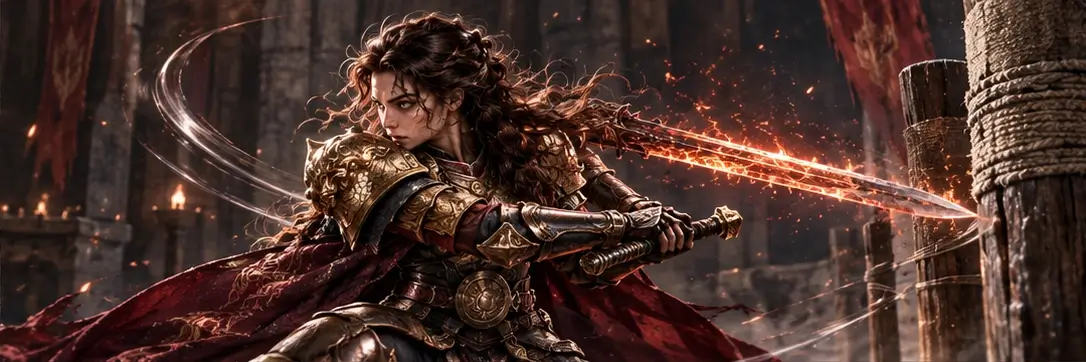
A guardian does not have to stop moving to announce an attack. It might draw one foot beneath its body, turn a shoulder and tighten its grip while its head continues tracking the knight. The preparation contains direction. In a Shadow & Ember animation concept, that is more useful than a dramatic freeze which could precede any action. The player should be able to distinguish a sweeping strike from a forward charge before either lands. Anticipation is a change in intention made visible, not simply empty time attached to the front of a movement.
Put the clue in the body
An expanding ground effect can reinforce the guardian's reach, but the body should still contribute to the message. A sweep gathers through the torso; a charge gathers through the legs and forward lean. If both begin with the same generic crouch, the player must wait for the effect to discover what the creature intends. Try the animations without particles and at the ordinary combat distance. The important difference may require a broad change of weight rather than a beautifully animated finger. Detail can enrich a cue once the cue has survived the camera.
Time belongs to the requested answer
A quick repositioning and a coordinated party response ask different things of the player. Their preparation windows should reflect that difference. Length alone is not the answer: a long wind-up with an unreadable turning point can feel less fair than a shorter, distinct one. Identify when the attack becomes recognisable, when its direction becomes committed and when damage begins. Those moments form the actual decision window. If the guardian keeps tracking until impact, a pose that seems to promise an early commitment has made a misleading offer.
A feint needs a grammar
A deceptive guardian can be interesting, but deception works best after a reliable pattern exists. A false sweep might stop before the shoulder turns, leaving a recognisable difference from the committed attack. The player can then learn a harder distinction. Randomly cancelling an identical preparation removes the basis for that reading. Use uncertainty to create a tactical question, not to make observation pointless. This boundary matters especially in a concept where guardian rhythms are part of the game's identity: a rhythm can vary, but it needs enough structure to be heard.
Keep the small preparations small
Outside combat, the knight can shift the lantern away from her shield before kneeling at a damaged beacon. That brief preparation explains the action and gives her a sense of care. It should not delay every interaction with a ceremonial preamble. Compare a first visit with the repeated return, and consider where the gesture can shorten or blend into movement. Anticipation serves both personality and practical reading. Its value depends on what follows and how often it is seen; a meaningful pause can become friction when the player's intention is already clear.
Explore Shadow & Ember