
A press is not a restoration
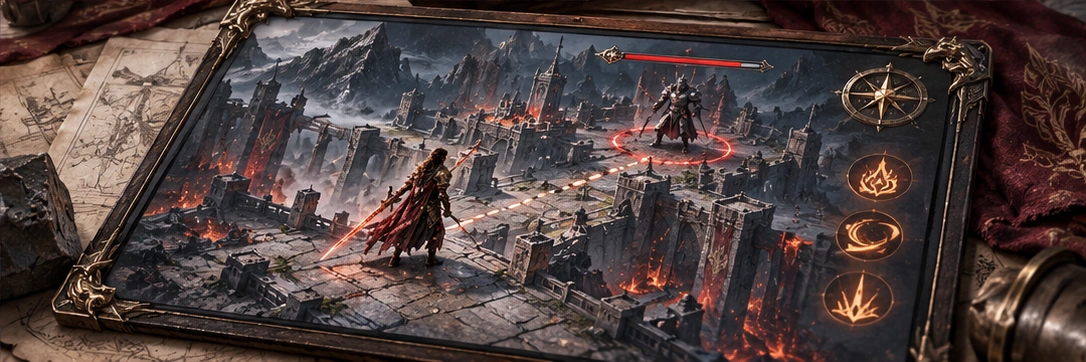
The knight touches the damaged beacon and offers light from her ember lantern. There are several facts to communicate: the input was received, the action is underway, and the sanctuary has changed. Giving each fact the same triumphant sound would blur the sequence. A small immediate response can acknowledge the command; a sustained movement can show the work; the light reaching the courtyard can confirm its result. In this Shadow & Ember concept, feedback becomes clearer when it follows the action's actual stages instead of declaring success at the first button press.
Give one consequence the leading role
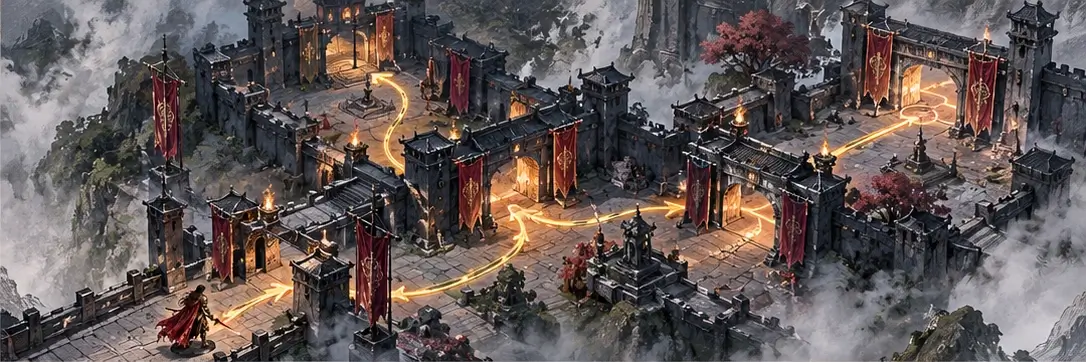
A restored beacon could unlock a route, alter a resource and update a journal. Those consequences need not all appear as competing banners. Let the world change take the leading role: the gate lifts and its passage becomes visible. A brief resource update can sit in the existing HUD, while the journal records detail for later inspection. The player still receives the information, but the moment has a centre. Ask which consequence changes the next decision. That consequence deserves immediate emphasis; the others can wait or speak more quietly.
Failure should name the missing condition
If the knight cannot restore a beacon, a generic error tone leaves too much work to the player. Is the ember exhausted, is a guardian's ward blocking the transfer, or is the knight standing beyond reach? Use a response tied to the cause. A blocked stream of light can point towards the ward; a short message can name the exhausted resource. Avoid blaming the input when the problem is a world condition. Repeated failure deserves a stable explanation, not an increasingly loud effect that says the same unhelpful thing.
Leave room for the next danger
An acknowledgement that feels charming in an empty chamber can obstruct a guardian encounter. Long celebrations, camera shake and bright overlays occupy the same attention needed to read an attack. Define how low-priority feedback behaves when a threat arrives: it might shorten, move into a history panel or lose its audio flourish. Urgent consequences still need to get through. This is an attention budget, not a campaign against delight. The right flourish belongs where the player has room to enjoy it, and repeated actions often need a lighter version.
Check what survives the celebration
After a proposed restoration sequence, ask someone what changed and what they can do next. Then offer the same action during a busier moment or with sound muted. The answers can reveal whether the player understood the result or merely noticed the celebration. Keep important changes inspectable after transient effects disappear; a gate should remain visibly open, and a resource total should remain available. Feedback works best when it joins input, cause and lasting consequence. Its intensity can vary with the action, but certainty should not depend on catching a notification before it fades.
Explore Shadow & Ember