Keep the reason visible
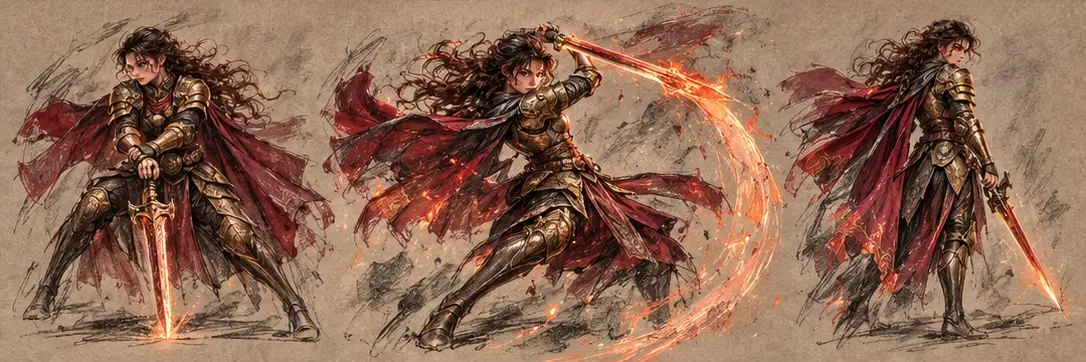
A revision begins with the gap between an intention and the current result. State that gap in specific terms: the player misses an exit, the character's pose conceals its direction, or a menu makes two different actions look equivalent. A broad instruction such as 'make it stronger' leaves too much room for incompatible interpretations. Write the intended improvement beside the work so everyone can refer to it during review. The note should describe the experience being changed, rather than prescribe every detail of the solution before alternatives have been explored.
Distinguish a problem from a proposal
Feedback often arrives as a proposed fix: add a glow, enlarge a button or move the camera. Ask what observation prompted that suggestion. A glow may be one way to improve recognition, but a clearer silhouette or better placement could solve the problem with less visual noise. Treat the proposal respectfully without mistaking it for the only answer. When the underlying need is explicit, artists, designers and engineers can contribute different solutions while still evaluating them against the same purpose. This makes disagreement productive rather than merely personal.
Change a coherent set of details
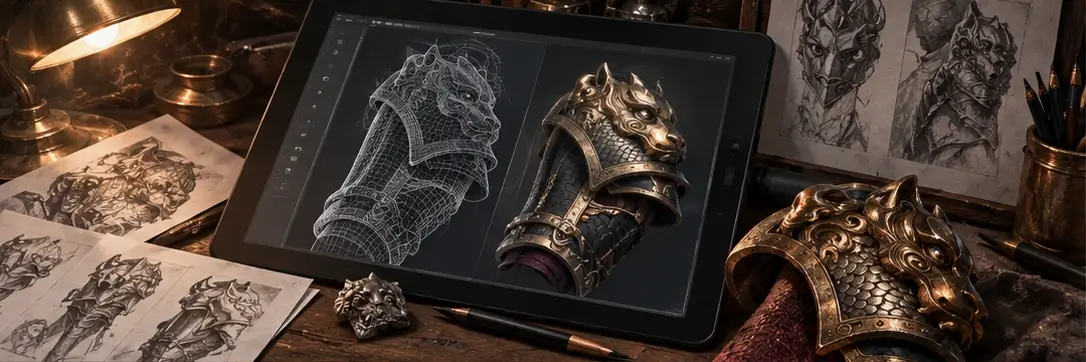
Some revisions require several connected adjustments. Enlarging an interface label may also require a different line break and more space around its icon. Changing only one of those details can make the result worse even when the original idea was sound. Identify the relationships that must move together, then keep unrelated improvements out of that pass. A coherent revision is easier to judge than a collection of incidental changes. It also helps the team understand which decision produced the observed result, rather than attributing success to an entire bundle of alterations.
Compare at the point of use
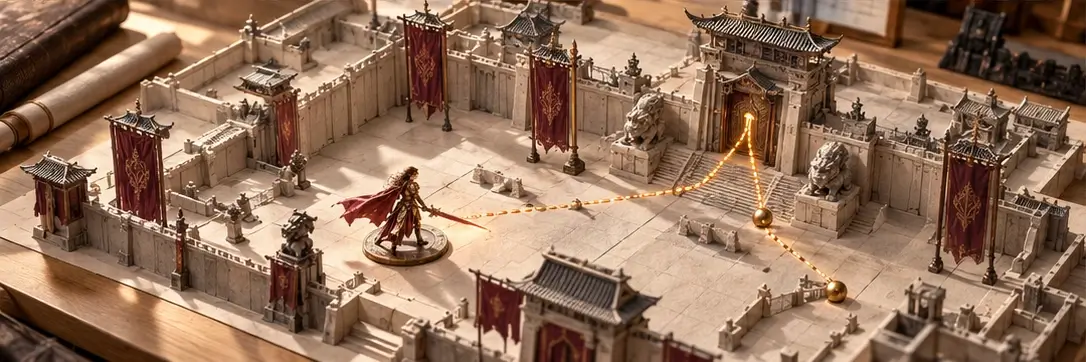
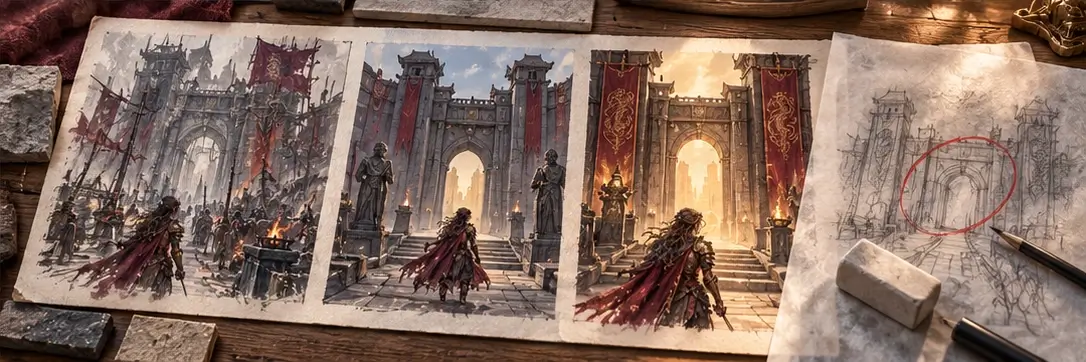
Review the revision where it will actually be encountered. A refined animation needs to be seen at gameplay speed; a navigation label needs to be tested among neighbouring choices; a background adjustment needs the character and effects present. Preserve the previous version and compare both under the same conditions. The new version should improve the original problem without quietly introducing a more serious one elsewhere. A beautiful close-up does not establish that an asset works in the scene, and a successful isolated interaction does not guarantee a clear sequence.
Know when to keep it
Revision does not mean changing a piece until every reviewer has contributed a visible mark. Once the stated problem is resolved and the surrounding experience remains coherent, record the decision and move forward. Preserve a short explanation of what changed and why, especially when the solution will guide related work. New evidence may justify another pass later, but uncertainty alone should not turn every approved piece into a permanent draft. Purposeful revision protects attention as well as quality: it leaves the team able to concentrate on the next problem that matters.
Explore Shadow & Ember