Begin with an answerable question
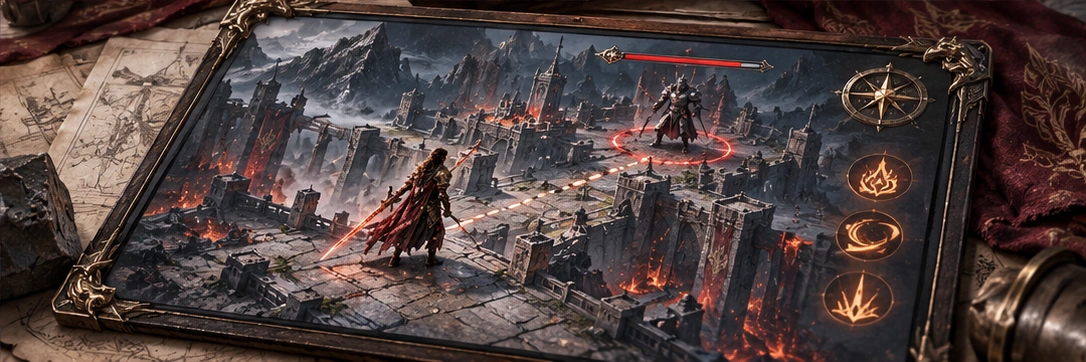
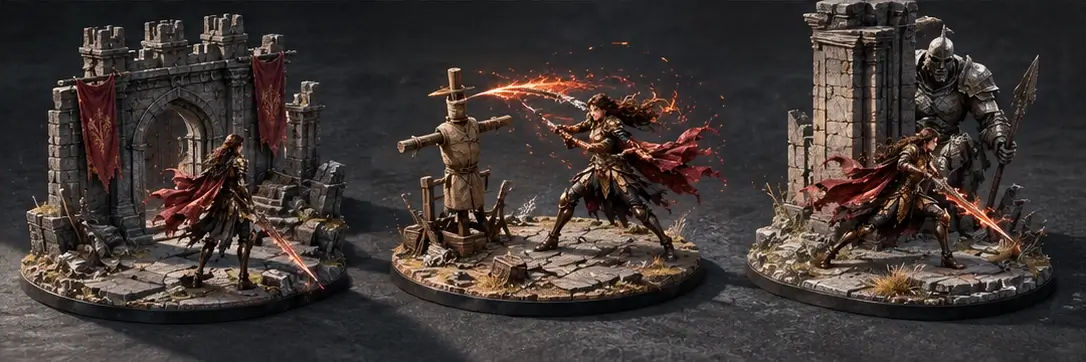
The first guardian in a ruined sanctuary could ask a modest question: can the knight recognise a charge and step out of its line? Give the creature a clear lane, a visible preparation and somewhere useful for the player to stand. Do not also introduce a rotating floor, an unfamiliar ally command and an ember shortage. The encounter can still feel dangerous. Its teaching value comes from making the relationship between observation and consequence legible, so the player has something more precise to learn than the fact that guardians hurt.
Make the first mistake informative
A failed dodge should leave a readable aftermath. The guardian might strike a stone buttress and remain pointed along its original path, while the knight lands safely enough to see what happened. If a cloud of debris hides everything and a restart follows immediately, the lesson is expensive and incomplete. This does not require protecting the player from every consequence. It means budgeting enough survival and visual space for a mistake to become information. A nearby refuge can shorten the return without removing the encounter's demand for attention.
Keep the verbs, change the sentence
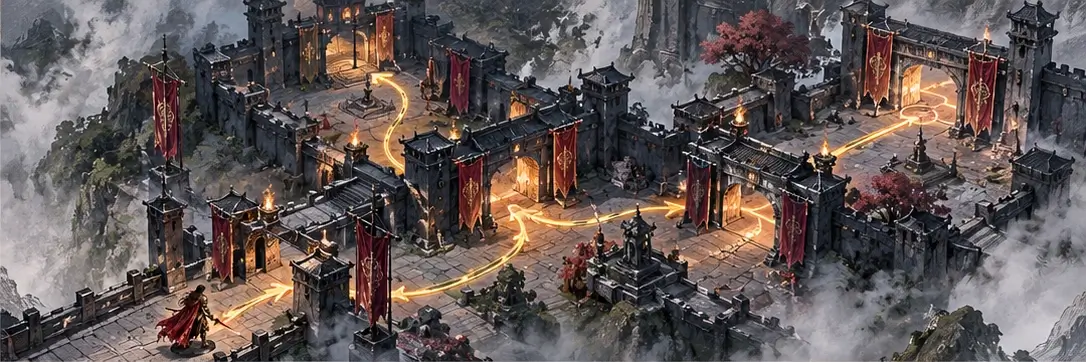
Once the charge is understood, a later guardian can combine it with a ward that narrows the available lane. The familiar action remains; its context changes. Now the player must decide where to move before the preparation begins. This is a stronger escalation than replacing the charge with an unrelated attack merely because a new phase has arrived. Familiar cues let difficulty grow through combinations. Save genuinely new behaviours for moments when the encounter has room to present them, and avoid changing the meaning of an established pose without an observable reason.
Allow more than one good answer
Learning should not quietly become compliance with the designer's preferred solution. The knight might evade the charge, an ally might interrupt it, or the party might use a pillar to create a recovery window. Each answer can have a different cost. This preserves the tactical character of Shadow & Ember while still teaching the guardian's rhythm. If a single response is mandatory, communicate why through the situation. A ward that blocks interruption is more understandable than an invisible rule that suddenly refuses a skill which worked moments earlier.
Look for understanding that travels
A player who wins may have learned the encounter, or may simply have survived it by spending every available resource. In a proposed playtest, ask them to anticipate the next charge and explain their choice, then offer the same behaviour in a different courtyard. If the knowledge travels, the teaching has a useful foundation. This method suits recurring combat grammar. A singular mystery can depend on surprise, and experienced players may not need a sheltered introduction. The decision is how much knowledge the next encounter assumes, and whether the previous one actually supplied it.
Explore Shadow & Ember